
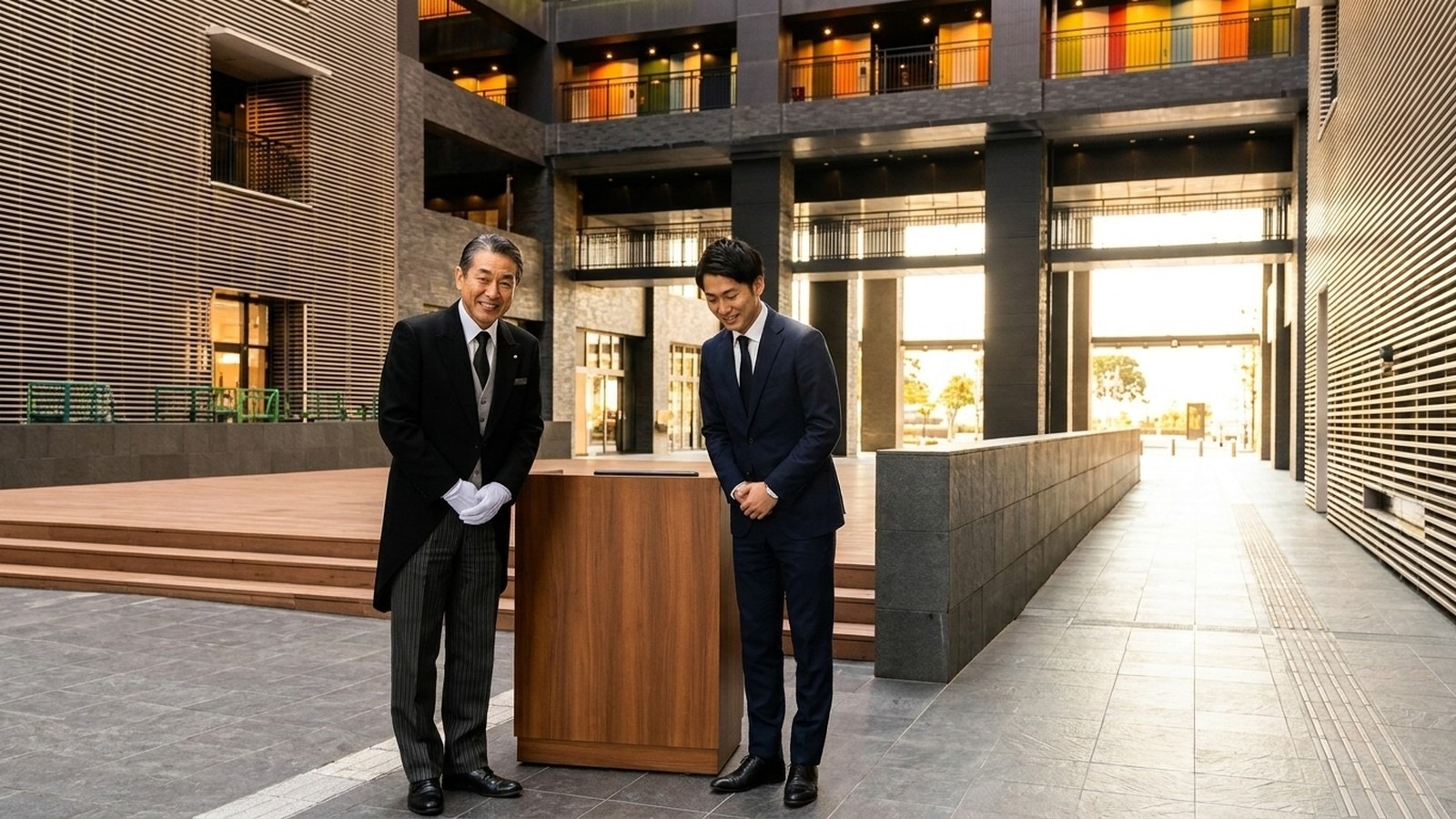
What Does a Butler Do?
WHAT A BUTLER DOES
A butler is a professional entrusted with the household and the hours of an employer and their guests, preparing what is needed before it is ever requested.
This page is a career guide to the work itself: the daily duties, an example of a working day, the settings in which butlers work, and the qualities the role demands.
DEFINITION
The Profession in a Single Sentence
The Work in One Sentence
To hold the whole of a household and its hours, and to set them in order in advance.
Responsible for the Whole, Not Individual Chores
A butler is entrusted with an employer household and everything that happens around it: people, possessions, time, and setting.
The role is not defined by individual chores such as cleaning or serving, but by directing all of them so that nothing falters, and stepping in personally whenever required.
This responsibility for the whole is what distinguishes the profession from other service occupations.
Acting Before Being Asked
At the centre of the work is moving without waiting for instruction. By reading a person and the shape of the day ahead, the butler prepares what will be needed and has it quietly ready.
It is not a role that seeks the spotlight: the finest outcome is a day that passes as though nothing had ever required attention.
Where the Remit Ends
Equally, this is not an occupation that undertakes anything and everything. Precisely because the work involves confidences and access to the private side of a household or organisation, a clear sense of where the remit ends is always required.
That judgement is itself one of the skills the profession rests upon.
FIVE AREAS
The Work Seen Through Five Areas
Five Areas of Daily Work
The duties are wide-ranging, but they can be organised into five areas. None of them stands alone; they overlap continuously to form the shape of a working day.
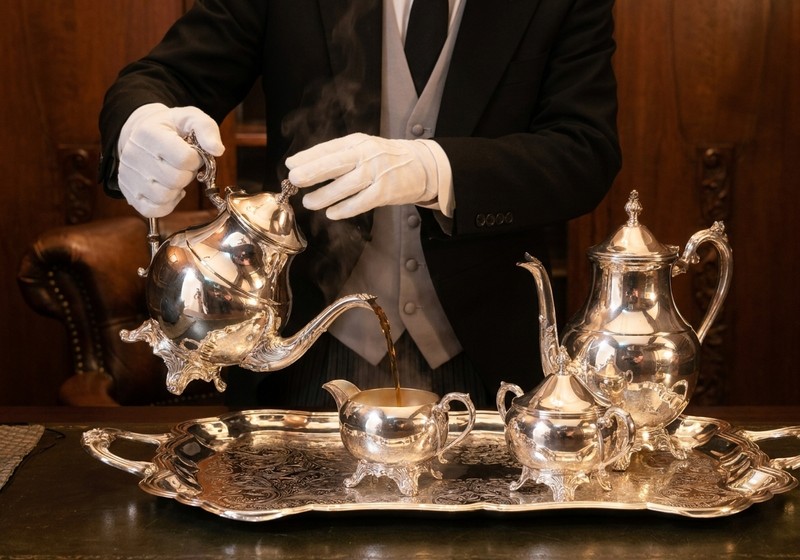
Receiving Guests and Serving
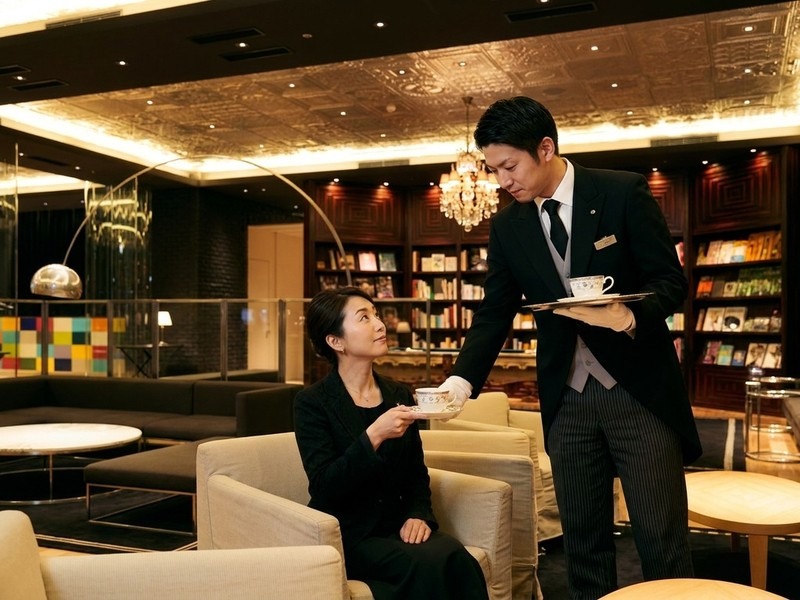
Holding the hours of a guest from arrival to departure: the greeting at the door, taking coats and luggage, serving tea and meals, and assisting people to be seated or to withdraw at exactly the right moment in a conversation.
Tea service and table setting are the foundations of this area.
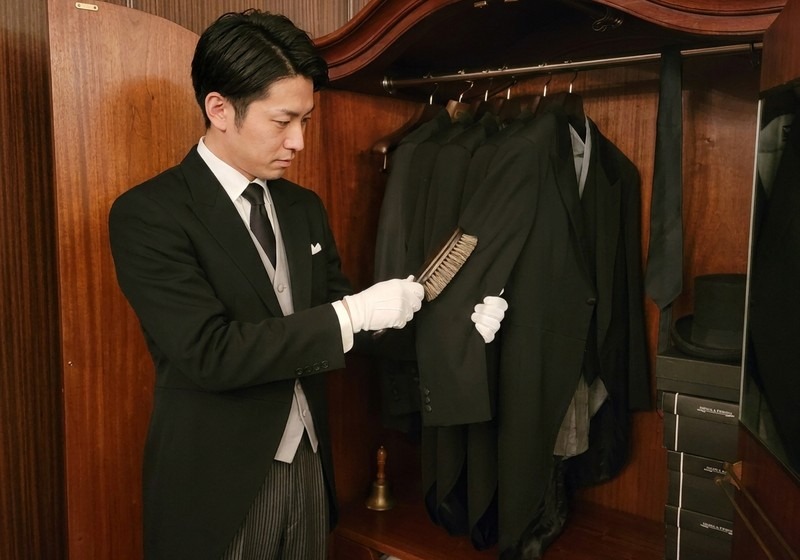
Care of the House and Its Spaces
Maintaining the residence or facility itself: the care of clothing and linen, the management of silverware and glassware, seasonal changes to the setting, and the replenishment and inspection of supplies. Daily checks, accumulated, keep the house in a state where anyone may be received at any moment. The duties of the traditional English butler divide broadly into four: the direction of the male servants and the household administration, the keeping of the wine cellar, direct personal service to the master, and the care of the silver and china — two of which belong to this area. The keeping of the wine was the origin of the butler's office: he chose the wines to his master's taste, attended to the orientation and placement of the bottles so that their quality was preserved, and regulated the temperature and humidity of the cellar with the seasons.
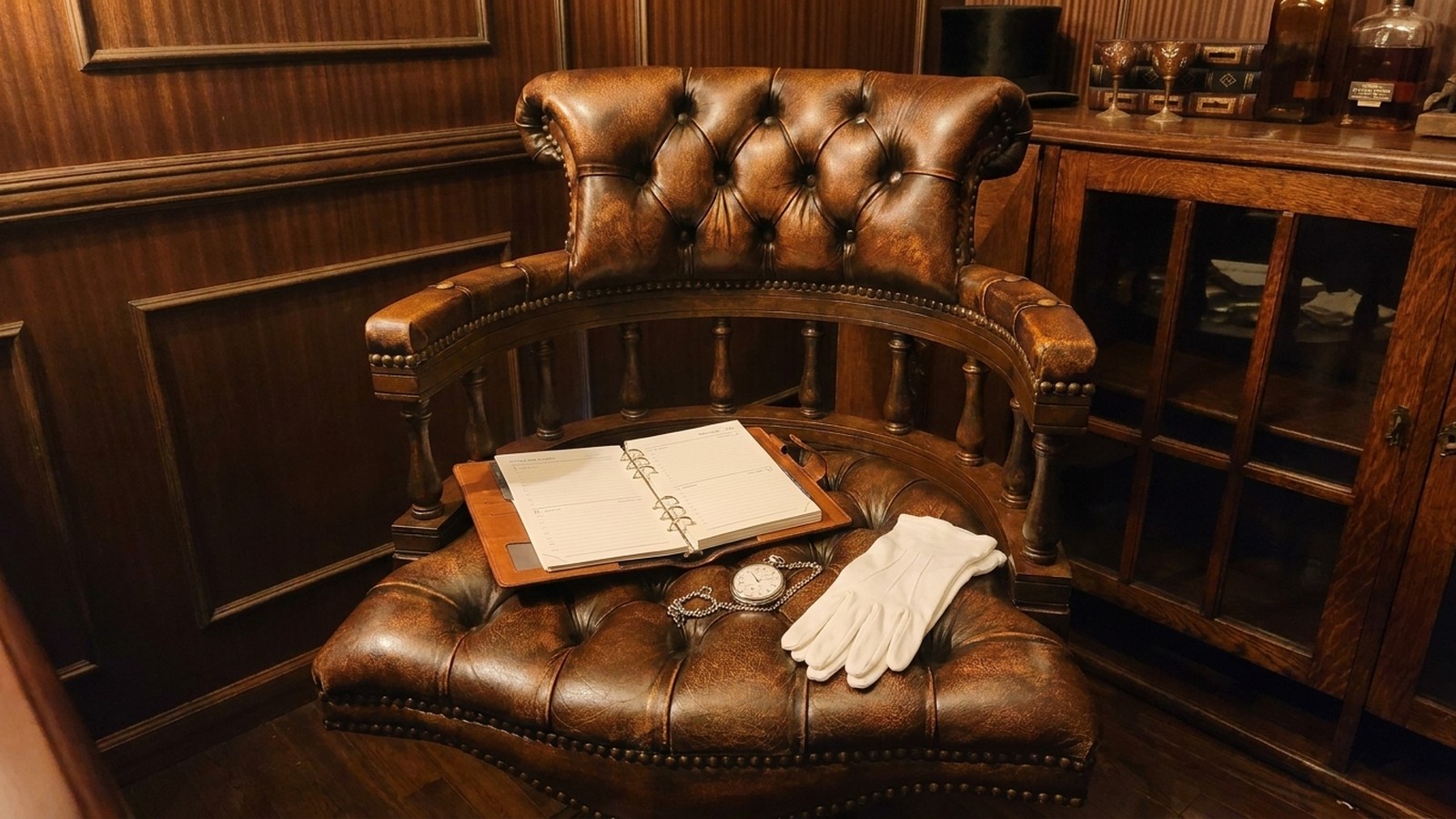
Scheduling and Arrangements
Building the schedule and completing arrangements ahead of time: coordinating visits and occasions, planning travel, liaising with outside suppliers and shops, and keeping track of anniversaries and customs.
The point is to find problems on the schedule first, so that they never arrive on the day itself.
Directing People
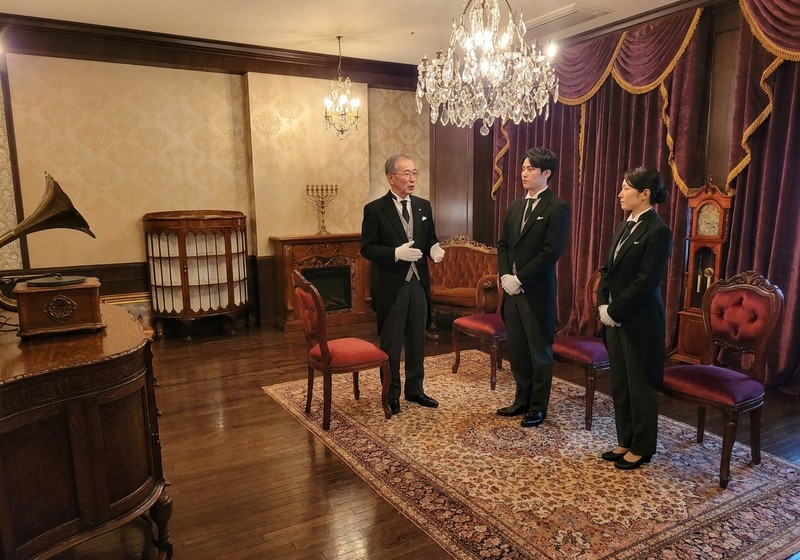
Bringing together a setting in which several people are involved: deciding who takes which duty and when, communicating the plan for the day, and balancing the load at the hours when work overlaps.
A single word of instruction can change the atmosphere of a team, so conversational skill is indispensable here.
Response in an Emergency
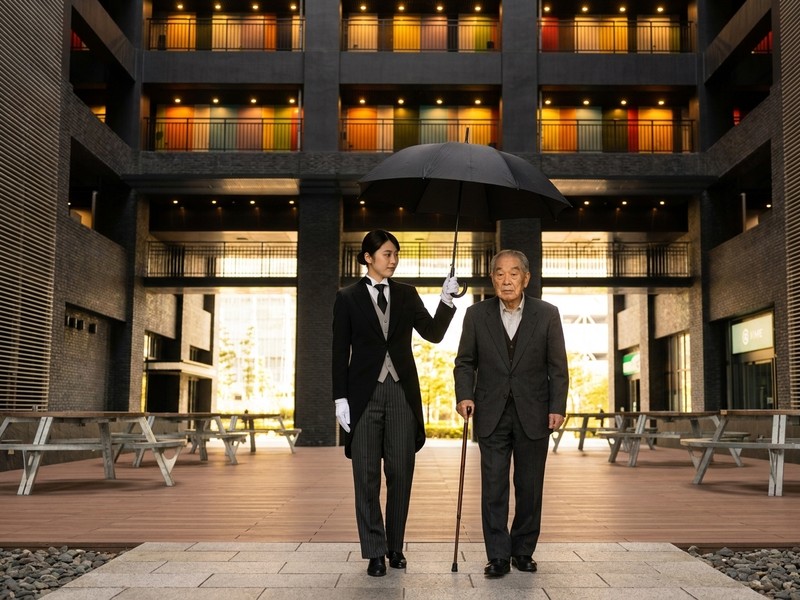
Acting when the unexpected occurs: a sudden illness, a failure of equipment, a natural disaster, an unidentified caller. Such events are rare, but the butler is the person asked to make the first judgement the moment they happen.
The role requires composure and a rehearsed procedure for calming those present and reaching the right authorities.
A DAY IN THE ROLE
A Working Day (One Example)
An Example of a Working Day
The pattern of work varies greatly with the workplace and the circumstances of the employer. What follows is offered purely as an illustrative example of a day in private service. It does not represent the schedule of any actual household.
Morning
Preparing the Day
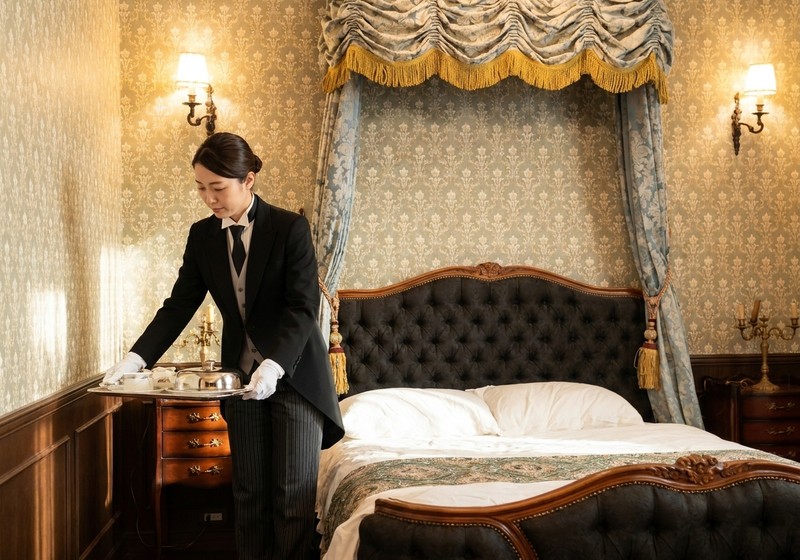
The day begins with a circuit of the building and its arrangements. The entrance, the living rooms, and the dining table are checked; morning drinks, newspapers, and the clothing required that day are made ready.
The schedule is then read through again to identify anything that weather or traffic may force to change.
Daytime
Reception and Coordination
Receiving guests, handling calls and correspondence, and liaising with outside suppliers all converge in these hours. Between appointments, management tasks such as replenishing supplies and caring for clothing are fitted in.
When a plan shifts, everyone affected is informed early and the remainder of the day is rebuilt around the change.
Evening
Dining and Its Setting
On days with a dinner, seating, tableware, and drinks are prepared in stages. Numbers, health, and any dishes to be avoided are confirmed, and the order and spacing of service are decided to suit the flow of the occasion.
On days without a dinner, the time goes to preparation and upkeep for the days ahead.
Night
Closing and Looking Ahead
At the close of the day, sources of heat and every lock are checked, and the tableware and tools used are returned to their proper state. Finally, observations from the day, the following day plans, and anything to be handed over are written down.
This accumulated record is what makes the next day anticipation possible.
* The above is only one example. Positions in hotels and residences may involve shift work, and the shape of a day differs from workplace to workplace.
WHERE BUTLERS WORK
Where the Profession Is Needed
Where the Role Is Needed
Private homes are far from the only setting. The role now extends across residences, hospitality venues, and the reception environments of corporate life.
Private Residences
Serving a single household and holding responsibility for the whole of its daily life. Because the work follows the rhythms of a family, the range of duties is at its widest here.
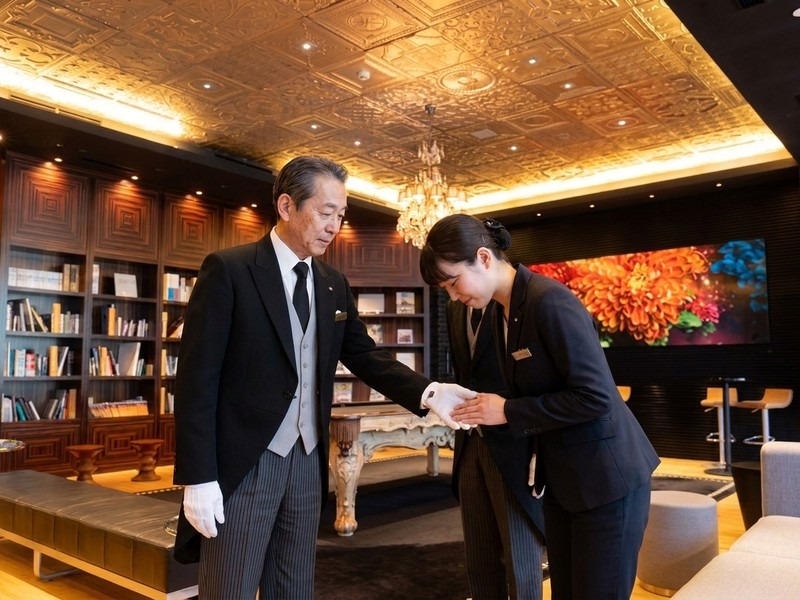
Hotels and Residences
Meeting the requests of guests throughout their stay in accommodation or serviced residences. Because duties pass between colleagues on a rota, accuracy in handovers and care in record-keeping are essential.
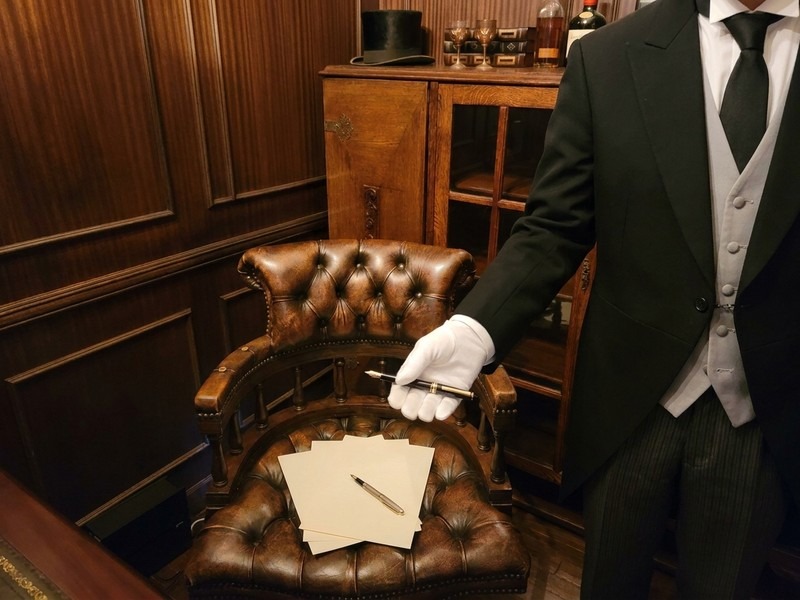
Corporate Reception Settings
Reception desks, meeting rooms, and corporate events all benefit from a butler technique. Bearing and choice of words are received directly as the impression of the organisation itself.
* Working patterns and conditions vary considerably by employer, and forms of engagement are not uniform. Please confirm specific terms in each individual vacancy or employment contract.
INCOME
What Butlers Earn
Overseas Figures, Read with Care
Pay for butler roles varies widely with experience, location, live-in or live-out arrangements, and the scope of responsibility. The figures below are drawn from two overseas surveys published in 2026.
They are offered as reference points only, not as a promise of any particular income.
United Kingdom
United States
According to Oplu (Private Staff Salary Guide 2026), principal-residence level roles in the United States are cited in the range of $110,000–$190,000 per year (gross annual, full-time, live-out unless noted).
As elsewhere, actual terms depend on the household, the breadth of duties, and whether accommodation is provided.
Europe (Selected Locations)
Oplu (Private Staff Salary Guide 2026) cites Monaco and the South of France at €6,000–€9,500 net per month, and Switzerland at CHF 7,500–13,000 per month.
These are location-specific reference bands from that survey and are not interchangeable across countries or employers.
What Shapes Pay
Across the sources above, pay moves with years of experience, whether the post is live-in or live-out, the value placed on accommodation and benefits, seniority (including head butler roles), and the segment of employer—from general private service through to large principal residences and UHNW households. Bonuses and benefits, where offered, sit on top of base rather than replacing it.
Japan
No public statistics or widely cited survey data for butler pay in Japan could be confirmed at the time of writing. Terms vary with live-in or live-out arrangements, the scope of duties, and the type of employer.
Specific conditions should be confirmed in each individual vacancy or employment contract.
* Figures above are overseas reference points from Lighthouse Careers, "Butler Salary UK: Complete Compensation Guide for 2026" (updated 17 May 2026), and Oplu, "Private Staff Salary Guide 2026" (published 26 Apr 2026, updated 29 Jun 2026).
They reflect conditions at the time of each survey and do not guarantee employment or income.
Please confirm actual terms in each vacancy or employment contract.
WHAT IT TAKES
Qualities the Role Demands
Qualities the Work Demands
This profession rests less on glamour than on four qualities that appear, at first glance, entirely unremarkable. Every one of them can be developed through training.
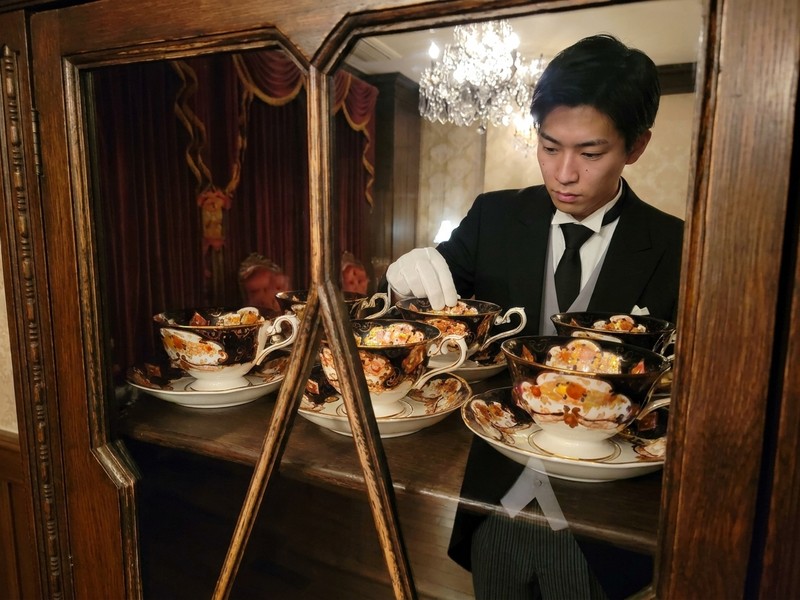
Powers of Observation
The ability to read an unspoken wish from a gesture, a glance, or a change in tone of voice. Nothing can be anticipated that has not first been noticed.
Preparation in Advance
The habit of acting before an event rather than after it. Looking ahead in the schedule, the butler quietly prepares whatever will shortly be required.
Unshakeable Composure
Holding expression and bearing steady even in the unforeseen, so that anxiety does not spread to those present. Remaining calm is itself a contribution to the moment.
Absolute Confidentiality
Never allowing what has been learned to leave the house. This is the precondition of the profession: without trust, no other skill carries any meaning.
IS IT FOR YOU
Who Thrives, and Who Finds It Demanding
Who Thrives in This Role
Aptitude is not fixed at birth, yet tendencies do exist. The following is offered as material for reflecting on your own disposition.
Likely to Thrive
- Those who notice small changes in the manner of others
- Those who do not mind setting a procedure and building on it exactly as agreed
- Those who find reward in supporting an occasion rather than leading it
- Those already in the habit of keeping what they hear to themselves
Likely to Find It Demanding
- Those who struggle to sustain motivation without immediate recognition
- Those who feel strong resistance when a plan has to change
- Those inclined to place their own sequence of work above the convenience of others
Suitability is not a fixed condition. Observation and preparation in particular are the areas that improve most readily with repeated practice.
If some of these points give you pause, it is entirely sufficient to regard them as subjects for training.
HOW TO START
The Path Into the Profession
The Path Into the Profession

There is no single entrance. Some move across from hospitality settings such as hotels and restaurants; others retrain from an entirely different occupation.
What they share is this: acquiring the mastery of form properly, before stepping into a working environment, changes the rate at which everything afterwards develops.
The Japan Butler Academy maintains a main campus in Odaiba, Tokyo, that students can attend in person, making it the only butler training school in Japan with a campus of its own.
There, that mastery of form can be learned systematically: understanding the reasons in the lecture room, absorbing the technique through practice, and experiencing conditions close to real service through role-playing.
Our programmes are built on that cycle.
Those who complete a prescribed course and pass its assessment receive a butler credential certified by The All Japan Butler Association.
If you would first like to know what is actually studied, please see our curriculum and skills pages. If you would rather experience the atmosphere before deciding, a one-day taster course is also available.
FAQ
Frequently Asked Questions
Frequently Asked Questions
It means being entrusted with the household and the hours of an employer and their guests, and preparing what is needed before it is requested.
The duties span five areas: receiving guests and serving, care of the house and its spaces, scheduling and arrangements, directing people, and response in an emergency.
The scope of responsibility differs.
Rather than carrying out individual chores or administrative tasks, a butler surveys the household and its schedule as a whole, directs them, and steps in personally as required.
In the British house, the housekeeper led the female indoor staff, taking charge of linen and china and the purchase and issue of household goods while directing the housemaids who did the cleaning.
The butler, by contrast, supervised the footmen under him, managed the wines and silver, and oversaw the service of the table; in houses that kept no steward he also carried personnel and accounts and served as head of the staff.
The steward was the post at the head of the indoor household, but it was kept only in houses of exceptional size, so in most houses the butler was in practice the head.
Secretarial work such as managing the diary and handling correspondence also falls to the butler, but only as one part of directing the household as a whole.
As one example: the building and its arrangements are prepared in the morning, the daytime is given to reception and coordination, the evening to dining, and the night to closing and preparing for the following day.
The pattern varies greatly, however, with the workplace and the circumstances of the employer.
These vary considerably with the form of engagement, the workplace, and the scope of responsibility, so no single guide figure can be given. Please confirm specific terms in each individual vacancy or employment contract.
Yes. Some of those who pursue it retrain from an entirely different occupation.
The Japan Butler Academy offers programmes that build step by step from the fundamentals, and its practice-centred training as a butler training school allows those without experience to begin from the mastery of form.
Salary varies with location, years of experience, the scope of duties, and whether the role is live-in. Overseas reference points include a UK 2026 survey citing £35,000–£45,000 at 0–2 years, £50,000–£70,000 at 3–7 years, and £75,000–£120,000 at 8+ years; a UK UHNW-focused guide citing £65,000–£105,000, or £95,000–£150,000 for a head butler at a large principal residence; US principal-residence level roles at $110,000–$190,000; and Monaco or the South of France at €6,000–€9,500 net per month, or Switzerland at CHF 7,500–13,000 per month. Live-in accommodation in London is valued at roughly £15,000–£25,000 a year. No public statistics for Japan could be confirmed, so no single figure can be given for Japan. These figures are reference points only and do not guarantee employment or income.
For any further enquiries, please use our contact form.
NEXT STEP
Beginning With the Learning
Now that the shape of the profession is clear, the next step is to look at how it is learned. The Japan Butler Academy conveys everything from the fundamentals to practical technique as a butler training school.
* Online consultations are also available.
LEARN MORE
Related Pages
Explore Further
Skills Covered
The five skill areas students acquire
Curriculum Overview
The overall structure and approach to learning
Practical Training
Training centred on practice and role-playing
Course Comparison
Compare our three courses at a glance
Certificate and Certification
The Association credential earned upon completion
Taster Course
Experience butler technique in a single day
Last updated: 25 July 2026